Views: 0 Author: Site Editor Publish Time: 2026-09-04 Origin: Site
Planning a wedding means curating unforgettable moments for everyone involved. Translating a beautiful visual mood board into a functional setup brings numerous challenges. You need a scalable, safe, and technically sound design. Stunning floral arrangements easily fade into the shadows without proper illumination. Your chosen aesthetic relies entirely on how well you light the room.
Lighting requirements shift dramatically throughout the long day. You move from the focused clarity of the ceremony to a high-energy reception. Poor stage lighting ultimately undermines expensive decor investments. Bad lighting creates dangerous safety hazards for your guests. It also severely limits what professional photographers can capture. Unflattering shadows can ruin otherwise perfect memories.
In this comprehensive guide, we explore essential stage lighting ideas. You will learn how to select the right fixtures for each phase. We help you manage strict venue restrictions effectively. We also examine modern wire-free solutions. These practical ideas keep your celebration safe while remaining visually spectacular.
Strategic lighting acts as a powerful force multiplier. It completely transforms standard venue spaces into breathtaking environments. Planners frequently struggle balancing aesthetic goals against fixed budgets. You can significantly reduce your need for excessive physical decor. Well-placed lights create immense visual depth. They add architectural drama instantly. They accomplish this for a mere fraction of a massive floral budget. A plain hotel ballroom looks entirely different under rich amber illumination. You essentially paint the room using vibrant light.
High-CRI (Color Rendering Index) lighting remains absolutely essential here. It ensures skin tones look completely natural on camera. You avoid annoying flickering issues during video playback. Harsh shadows ruin beautiful moments quickly. Professionals rely heavily on quality illumination. They need it to capture every detail perfectly. Standard venue lighting often casts an unflattering greenish hue. Professional stage fixtures correct these color imbalances instantly. Your photographer will deliver far better galleries as a result.
Lighting cues subconsciously guide guests through the evening. You can dim the room slightly after dinner ends. Changing color palettes signals the transition from dining to dancing. This invisible direction keeps the energy flowing naturally. Guests respond intuitively to environmental shifts. Warm whites encourage relaxed conversation during cocktail hour. Saturated magentas or deep blues ignite the dancefloor later. You control the emotional arc of the entire night.
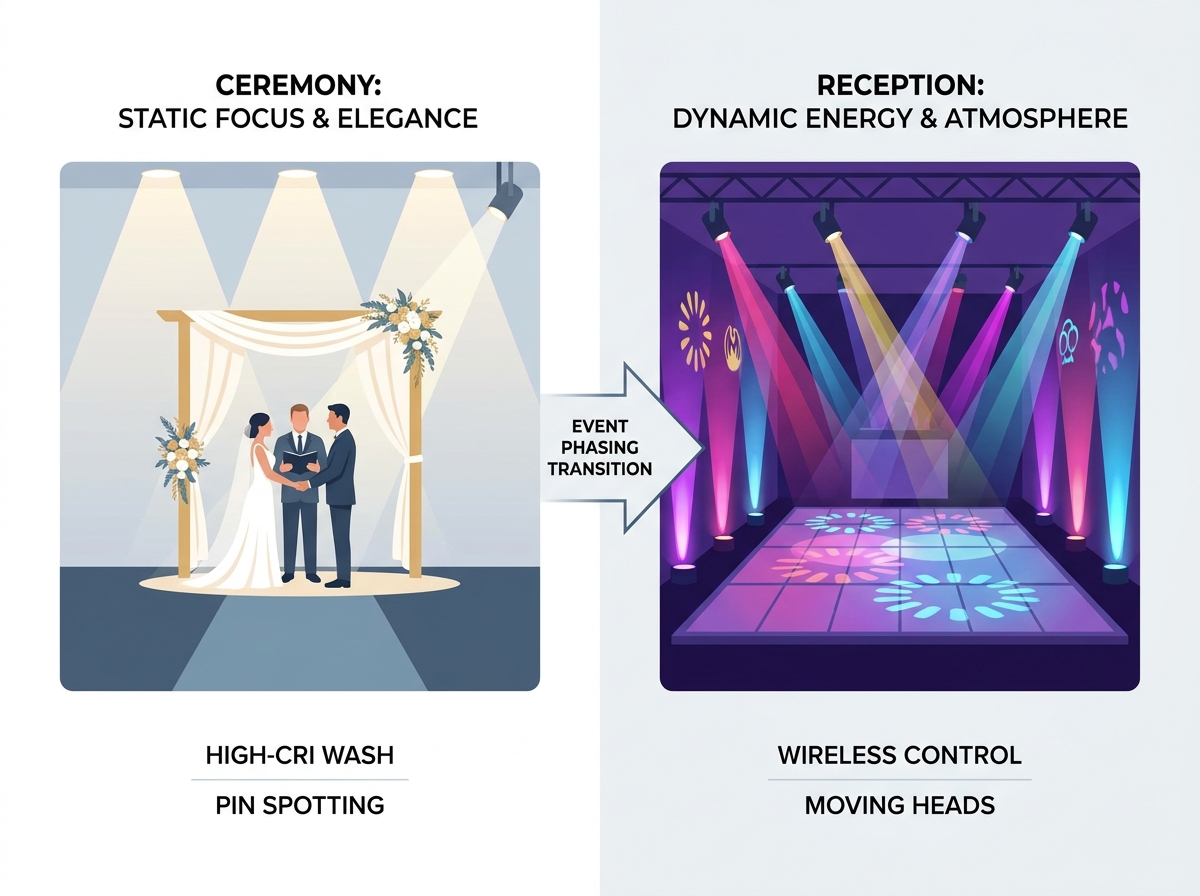
You must illuminate the altar or chuppah evenly. Soft wash lighting eliminates unflattering facial shadows during vows. Photographers need balanced exposure across the entire focal area. Uneven spots ruin crucial ceremony photos. Broad lighting creates a flattering glow. It ensures the couple remains the absolute center of attention.
Highlight the bride's path carefully using aisle pin spotting. Illuminate nearby floral arrangements precisely. Avoid bleeding excess light into the audience seating areas. Focused beams draw attention exactly where you want it. This technique adds immense drama to the processional. It makes the aisle feel like a dedicated runway.
Create visual depth for the focal stage using backlighting. Do this carefully. You must avoid blinding the officiant or the couple. Proper backlighting separates the subjects from the background beautifully. It adds a three-dimensional quality to the space. The result looks highly cinematic on film.
Transforming the reception space requires a layered approach. Follow these structured steps to build your atmospheric design:
Moving heads inject vital energy into the late-night celebration. They sweep colorful beams across the room dynamically. This transforms a formal dining area into an exclusive nightclub environment. The contrast between phases keeps guests fully engaged.
Event teams face severe logistical realities today. They often must move fixtures from an outdoor ceremony to an indoor reception quickly. Venues frequently demand complete room turnovers in under 45 minutes. A Battery Light eliminates time-consuming cable management entirely. Crews simply pick up the fixtures and reposition them. They do not waste precious minutes taping down long power cords. This speed proves invaluable during tightly scheduled events.
You must eliminate cable runs across high-traffic guest areas. This reduces liability significantly. It also strictly adheres to modern venue safety policies. Guests can walk freely without danger. Older guests and children face high tripping risks. A completely wire-free environment ensures maximum safety. It provides ultimate peace of mind for the coordination team.
Historic venues and outdoor tents frequently lack accessible power outlets. You can place uplights and pin spots near center-room pillars effortlessly. You are no longer restricted by wall outlet locations. This placement flexibility unlocks creative design options. You can illuminate remote trees, statues, or exterior pathways easily.
Always evaluate hardware stamina before committing. Source fixtures featuring verified 8–12 hour runtimes. Test them under full color mixing loads. This ensures they survive through the entire event timeline. A fixture dying halfway through the first dance creates a noticeable aesthetic failure. Reliable lithium-ion technology now guarantees consistent performance.
Specific features dictate your aesthetic outcomes directly. Color mixing capabilities determine your exact palette options. RGBWA+UV technology remains necessary for achieving specific wedding tones. True amber, warm white, or soft blush look elegant. Harsh primary colors often look cheap. The addition of white and amber diodes softens the overall output perfectly.
Wireless DMX (W-DMX) proves absolutely essential for synchronizing color changes. You can control the whole room from a single iPad. No data cables are required. This technology allows instant atmosphere shifts. You can blackout the room for a grand entrance instantly.
Select IP65-rated fixtures if any portion takes place outdoors. Cocktail hours and ceremonies face unexpected weather constantly. Water-resistant gear safeguards against sudden rain. You never want to scramble pulling expensive equipment inside during a sudden downpour. Proper IP ratings protect your investment.
Opt for low-profile, white-housing fixtures whenever possible. They blend beautifully into light-colored wedding decor. Avoid bulky, black industrial stage equipment inside delicate spaces. The hardware should remain practically invisible to your guests. Only the beautiful light output should capture their attention.
Stage Lighting Feature Comparison
| Feature Category | Ideal Specification | Practical Benefit |
|---|---|---|
| Color Mixing | RGBWA+UV Diodes | Achieves true amber and soft blush tones rather than harsh primary colors. |
| Control System | Wireless DMX (W-DMX) | Synchronizes room transitions globally without taping data cables to the floor. |
| Weather Resistance | IP65 Rating | Protects fixtures against unexpected outdoor rain and excessive dust. |
| Hardware Aesthetics | White Housing / Low Profile | Blends seamlessly into elegant, light-colored wedding decor setups. |
You must calculate total amperage carefully for non-battery fixtures. Doing so prevents tripping venue breakers during peak reception hours. Older historic venues often have surprisingly strict power limits. A single catering coffee maker can blow a circuit. Adding heavy lighting loads exacerbates this risk entirely. Always consult the venue manager regarding available power drops.
Heavy truss setups pose significant risks in non-purpose-built venues. Rigging safety demands immense professional respect. Consider using heavy-duty base plates instead. Vertical totems offer stable alternatives for mounting moving heads. They keep the footprint small while maximizing height. Never hang heavy equipment over guest tables without certified rigging professionals.
Avoid the common mistake of the "Over-Lighting" trap. Using aggressive, concert-style strobes ruins the mood quickly. High-intensity flashing easily induces fatigue or physical discomfort. Keep the wedding environment inviting and pleasant. Subtle chases and smooth fades work much better. You want guests to feel energized, not visually assaulted.
Always prioritize redundancy planning for critical moments. Bring backup units to every single event. You need a hardwired control alternative on standby. Local RF interference occasionally disrupts wireless DMX signals. Crowded hotel Wi-Fi networks can interfere with basic lighting routers. Having a backup cable ensures the show continues flawlessly.
Successful wedding designs balance aesthetic desires with firm logistical constraints. You must account for power availability, setup time, and guest safety. Strategic illumination elevates the entire venue experience effortlessly. It highlights your expensive decor while setting the perfect emotional tone.
Prioritize versatile fixtures during your shortlisting process. Equipment should work beautifully across both the ceremony and the high-energy reception. A reliable Battery Light setup provides the ultimate flexibility here. It allows rapid room turnovers while keeping the floor completely safe.
We strongly recommend conducting a thorough venue site visit soon. Audit the available power drops carefully. Measure ambient sunlight at different times of day. Finalize your equipment list only after understanding the room's physical limitations completely.
A: A reliable guideline involves placing fixtures every 10–15 feet along the perimeter. You must factor in room dimensions and specific architectural features. Columns, window drapery, and dark corners often require dedicated fixtures. Always order a few extra units to accommodate unexpected dark spots.
A: Yes. It requires selecting fixtures featuring high-capacity lithium-ion batteries. You must also manage brightness intensity carefully. Running fixtures at 70% instead of 100% extends their runtime drastically. They will easily survive an entire eight-hour event timeline using this simple strategy.
A: Wash lights provide broad, soft illumination for general visibility. They fill large areas evenly. Spot lights create focused, hard-edged beams. You use spots to highlight specific targets. Typical targets include the wedding cake, floral centerpieces, or the sweetheart table.
A: For basic static uplighting, you generally do not. You set the colors once and leave them alone. However, for mid-event transitions, moving heads, and synchronized dancefloor changes, an on-site technician becomes critical. They ensure complex cues execute perfectly alongside the DJ or band.