Views: 0 Author: Site Editor Publish Time: 2026-02-11 Origin: Site
LED PAR Light fixtures have become a staple in modern stage and event lighting. If you’ve ever attended a concert, wedding, or live show, chances are you’ve seen an LED PAR Can Stage Light in action. These compact yet powerful lights offer strong brightness, flexible color control, and impressive energy efficiency. In this guide, we’ll explore what an LED PAR Can Stage Light is, how it works, the different types available, and how to choose the right setup for your space.
An LED PAR Can Stage Light is one of the most widely used fixtures in modern stage and event lighting. You’ll see it everywhere—concerts, theaters, clubs, exhibitions, and even small home stages. It delivers strong, controllable light while staying efficient and easy to use.
The term PAR comes from Parabolic Aluminized Reflector. Originally, it described the reflector shape used in traditional lamp-based stage lights. That reflector focused light into a strong, directional beam.
An LED PAR Can Stage Light keeps the familiar PAR form factor but replaces the old halogen lamp with LED technology. Instead of a single hot filament bulb, it uses multiple LEDs to produce light. This change improves efficiency, color control, and lifespan.
Compared to traditional PAR lights, LED PAR cans:
Consume far less power
Produce minimal heat
Offer built-in color mixing
Require almost no lamp replacement
Over time, LED models have largely replaced lamp-based PAR cans in both professional and entry-level setups.
You may also see LED PAR Can Stage Lights called:
LED Par Light
LED Par Can
Par Can LED
They all refer to the same type of fixture.
An LED PAR Can Stage Light looks simple, but several core parts work together to shape and control the light.
LEDs act as the heart of the fixture. They generate light efficiently and stay cool during operation. Most units use RGB, RGBW, or multi-color LED chips to create a wide color range.
Optical elements shape the beam. Narrow lenses create focused light. Wider lenses spread light evenly across stages or walls. Some fixtures allow lens changes for flexible beam angles.
The housing protects internal components. Plastic enclosures reduce weight and cost. Aluminum housings improve heat dissipation and durability. Both designs are common today.
Control options define how you use the light:
Manual control for basic brightness and color
DMX control for precise programming and syncing
Wireless control for quick setups and mobile rigs
Most LED PAR cans support more than one control method, making them flexible for beginners and professionals alike.
Component | Purpose |
|---|---|
LED diodes | Produce light efficiently |
Lenses & optics | Shape beam angle and coverage |
Housing | Protects and cools the fixture |
Control system | Adjusts color, brightness, effects |
LED PAR cans come in many forms. They may look similar outside, but they behave very differently on stage. We usually classify them by LED configuration, power and output, and application scenarios, which helps us choose the right fixture faster.
Different LED combinations affect color mixing, brightness, and how natural the light feels. RGB LED PAR Can models mix red, green, and blue LEDs. They create vivid colors and dynamic effects, making them common in clubs, DJ setups, and basic stage washes. White light feels harder, but for color effects, they do the job. RGBW LED PAR Can lights add a dedicated white LED. It improves skin tones, softens pastel colors, and makes lighting feel cleaner. We often see them at weddings, churches, and multipurpose venues. RGBA / RGBWA LED PAR Can fixtures include amber LEDs.
Amber fills color gaps and warms the output, which helps faces look better on stage and camera. They feel smoother and more balanced during performances. Hex (6-in-1) LED PAR Can lights combine six colors in one chip, often RGBWA plus UV. They deliver richer color blending, stronger saturation, and flexible effects. They are popular in professional stage lighting systems. COB LED PAR Can Stage Lights use a single, high-density LED source. The beam looks uniform, without color shadows, and feels very theatrical. They work well for clean stage washes and drama lighting.
LED Type | Color Quality | Typical Use |
|---|---|---|
RGB | Basic | Clubs, DJs |
RGBW | Better whites | Events, venues |
RGBWA | Warm tones | Stage, broadcast |
Hex | Full spectrum | Professional shows |
COB | Smooth output | Theater wash |
Power rating affects brightness, beam reach, and stage coverage. Low-power LED PAR cans usually stay under 30W. They suit uplighting, décor, walls, and small spaces. Power consumption remains low, and setup feels easy. Medium-power LED PAR cans often range from 30W to 100W. They fit small stages, bars, clubs, and mobile shows.
Brightness balances well with size and portability. High-power LED PAR cans start around 150W and go higher. They handle concerts, theaters, and large venues. Output stays strong even under heavy stage lighting.
Where you use the fixture matters as much as how it is built. Indoor LED PAR Can Stage Lights are designed for controlled environments. They focus on color accuracy, quiet cooling, and lighter weight for truss mounting.
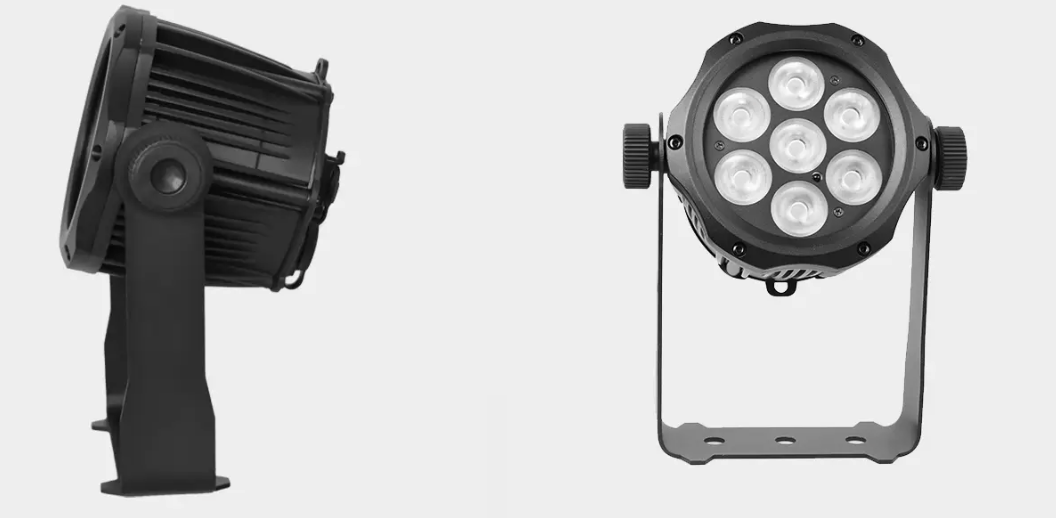
Outdoor or IP65 LED PAR Can Stage Lights handle rain, dust, and humidity. Sealed housings protect electronics, making them suitable for outdoor stages, festivals, and architectural lighting. Battery-powered LED PAR Can lights run without power cables. Setup feels fast and clean, and placement stays flexible. They work especially well for weddings, exhibitions, and temporary events.
PAR sizes often confuse beginners. We still hear these numbers everywhere in stage lighting. They come from older lamp standards, but they still help us talk about size and form.
PAR stands for Parabolic Aluminized Reflector. The number refers to the lamp diameter, measured in eighths of an inch. It sounds technical, but the math stays simple.
PAR 64 means sixty-four eighths of an inch. That equals eight inches across the face. PAR 56 equals seven inches. PAR 38 equals four and three-quarter inches. We often convert these sizes to millimeters when planning truss layouts or housings.
PAR Size | Diameter (Inches) | Diameter (mm) | Typical Look |
|---|---|---|---|
PAR 64 | 8.0 | ~203 mm | Large, classic can |
PAR 56 | 7.0 | ~178 mm | Medium profile |
PAR 38 | 4.75 | ~121 mm | Compact housing |
These measurements describe the front diameter only. They do not describe brightness, beam angle, or color output.
For LED fixtures, PAR numbers act as a size reference only. LEDs do not use reflector lamps like traditional halogen PAR cans. The light source and optics sit inside a different structure. Still, manufacturers keep the PAR naming system. It helps designers, technicians, and buyers visualize scale fast. When we hear PAR 64 LED, we expect a larger housing.
When we hear PAR 38 LED, we picture something compact and lightweight. PAR numbers also help during upgrades. Crews can replace old halogen cans using similar mounting positions and spacing. The name stays familiar, even though the technology inside has completely changed.
The right number always depends on space size, brightness expectations, and coverage goals. We usually plan around coverage first, then adjust for color depth and visual impact.
Home parties, DJ corners, garages, small rooms need fewer fixtures. We focus on mood lighting instead of full stage coverage. Two to four LED PAR cans often work well. Place them at corners, walls, or behind performers. They add color washes and movement without overpowering the space. Battery-powered models help here. No cables. Faster setup. Less clutter.
Typical setup ideas:
2 units for background wall washes
4 units for basic dance floor coverage
Wide beam angles reduce fixture count
Bars, cafés, rehearsal rooms, small clubs need more control. We want even front lighting plus color on the back wall. Six to twelve LED PAR cans fit most small stages. Use brighter fixtures for front wash. Softer units work well for backlighting. DMX control helps balance brightness and color changes.
Common placement approach:
2–4 units front truss
2–4 units rear truss
2–4 units side or floor positions
Weddings, outdoor tents, school stages, medium venues need wider coverage. Twelve to twenty-four LED PAR cans give flexibility. We spread them across truss lines and floor positions. Narrow beams handle accents. Wide beams fill large surfaces. Higher output fixtures reduce total quantity.
Stage Width | Suggested Quantity | Typical Use |
|---|---|---|
4–6 m | 8–12 | Bands, DJs |
6–10 m | 12–18 | Events, ceremonies |
10–14 m | 18–24 | Medium concerts |
Spacing matters more than raw numbers. We usually space LED PAR cans one to two meters apart for even washes. Wider beam angles allow larger gaps. Narrow beams need tighter spacing. Ceiling height also changes coverage. Higher mounts require either stronger output or more fixtures. When in doubt, we add a few extra units. It gives more creative freedom during programming.
A: Brightness varies by wattage and LEDs. Many produce 1,500–8,000+ lumens, enough for stages, events, and washes.
A: Yes, outdoor-rated models work well. Look for IP65 or higher protection.
A: Yes. They support manual control, auto programs, or sound activation.
A: Most last 30,000–50,000 hours under normal use.
LED PAR Can Stage Lights give creators real freedom. They adapt to small parties, professional stages, and outdoor events without complicated setups. Once you understand types, sizes, spacing, and color systems, choosing the right LED PAR Light becomes much easier.
If you’re planning a new lighting project or upgrading existing fixtures, Guangzhou Yawin Technology Co., LTD. offers reliable LED stage lighting solutions designed for performance, durability, and creative control. Reach out to explore options that fit your venue, budget, and vision.