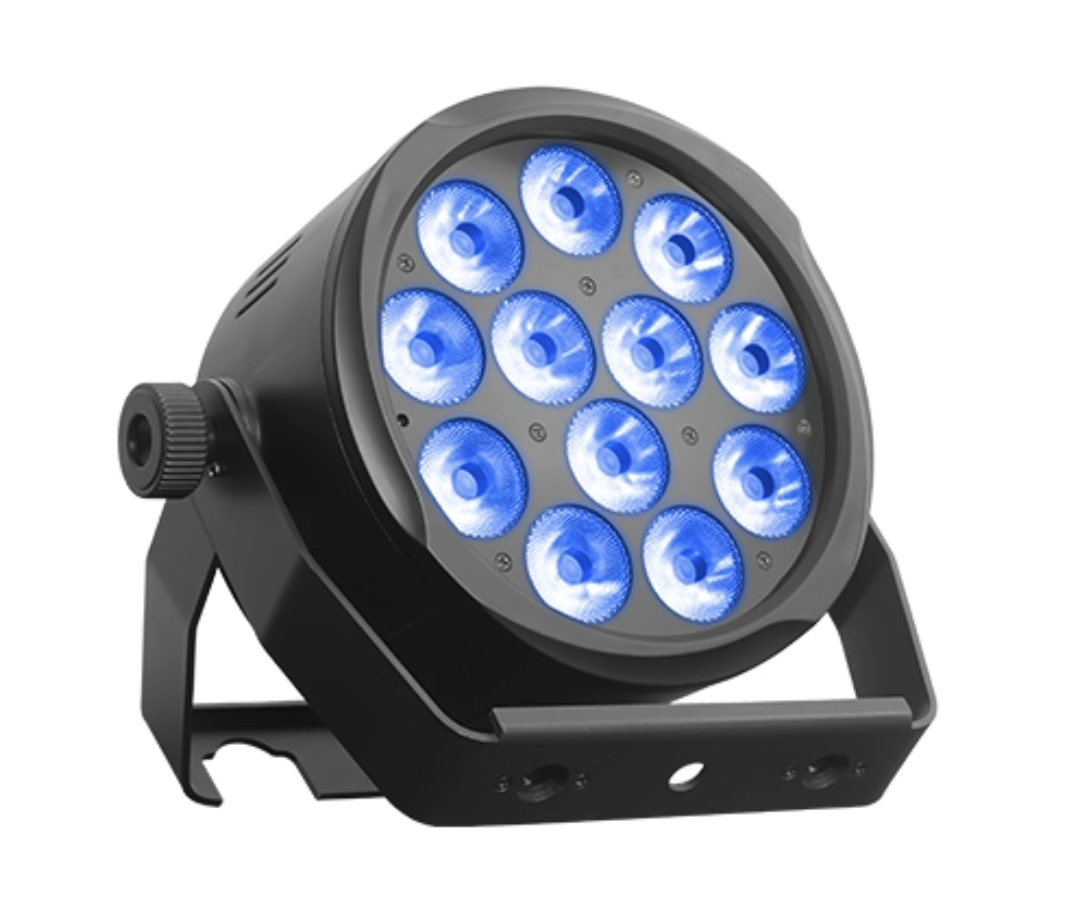
Views: 0 Author: Site Editor Publish Time: 2026-02-11 Origin: Site
Looking for powerful, versatile lighting? LED par lights have transformed stage and event lighting. But how do you choose the right one? In this post, you’ll learn what LED par lights are, their evolution, and why they matter today. We’ll guide you through key features to consider for your perfect lighting setup.
LED par lights come in various reflector types, each serving different lighting needs:
PAR (Parabolic Aluminized Reflector): Focused beams, narrow angles (5°–45°), great for spotlighting and accent lighting. They deliver strong, directional light to highlight specific objects or areas.
BR (Bulged Reflector): Wide beam angles (often over 100°), offering broad, even illumination. Ideal for general lighting in rooms or larger spaces where diffuse light is preferred.
MR (Multi-faceted Reflector): A hybrid between PAR and BR, MR lights provide moderate beam angles and a balance of focus and spread, suited for versatile lighting needs.
LED technology varies across par lights, affecting brightness and beam quality:
Bullet LEDs: Cost-effective, moderate brightness, colors may appear uneven when mixed. Good for budget-conscious setups.
Lens-mounted LEDs: Brighter than bullet types, with better color consistency during mixing. Ideal for performances requiring vibrant, uniform colors.
COB (Chip on Board) LEDs: High brightness and wide beam angles (60°–80°), excellent color blending. Perfect for broad washes and high-impact lighting.
Color options influence mood and versatility:
RGB (Red, Green, Blue): Basic color mixing for a wide palette.
RGBW (Red, Green, Blue, White): Adds white LEDs for clearer, brighter whites and pastel tones.
RGBA (Red, Green, Blue, Amber): Includes amber for warmer, more natural hues.
UV (Ultraviolet): Creates blacklight effects and enhances color vibrancy.
Warm White (WW): Soft, cozy light similar to incandescent bulbs.
Cool White (CW): Crisp, energizing light with higher color temperature.
Choosing the right color mix depends on the application — for example, RGB for dynamic color effects or RGBW/RGBA for professional events needing natural skin tones and accurate color reproduction.
When picking an LED par light, brightness is key. Many people confuse wattage and lumens. Wattage tells you how much power the light uses, but lumens show how bright the light actually is. For example, a 50-watt LED can be brighter than a 500-watt halogen bulb. So, focus on lumens to judge brightness.
Think about your space size and how much light it needs. A small room might need 1,000-2,000 lumens, while a stage could require 5,000 lumens or more. Always check the lumen rating to ensure your par light meets your brightness needs.
Beam angle controls how wide or narrow the light spreads. Narrow beams (around 10°-25°) create focused spots, great for highlighting performers or objects. Wider beams (40°-60° or more) cover larger areas evenly, ideal for general lighting or uplighting walls.
Choosing the right beam angle depends on your setup. For a DJ stage, a mix of narrow and medium beams works well to balance spotlighting and ambient light. For architectural lighting, wider angles help wash walls with color.
Color temperature affects mood. Warm white (2700K-3200K) feels cozy and soft, while cool white (5000K-6500K) is crisp and energizing. Pick based on the atmosphere you want.
Many LED par lights offer color mixing with RGB (red, green, blue) or RGBW (adds white) LEDs. RGB gives you a full color palette, while RGBW improves white light quality and pastel colors. Some models add amber (RGBA) or UV LEDs for richer effects.
If you want natural skin tones or soft pastels, RGBW or RGBA are better. For vibrant, dynamic shows, RGB is usually enough.
Dimming lets you adjust brightness smoothly, creating different moods. Some par lights have built-in dimmers; others need external controllers.
For professional setups, DMX control is common. It allows syncing multiple lights, programming colors, and effects. Wireless DMX systems add convenience, reducing cables and setup time.
Make sure your par lights support the control system you plan to use. This ensures easy integration and flexible lighting design.
LED par lights are essential for stage lighting. They highlight performers and create moods. For stages, choose lights with high brightness and good color mixing, like RGBW or RGBA models. Narrow to medium beam angles (15°–40°) work best to focus on performers without spilling light. DMX control lets you sync lights to music and effects, making shows dynamic. Position lights on trusses or floor stands for front, back, and side lighting. Layering different beam angles adds depth and interest.
For architectural lighting, LED par lights add drama and highlight features like columns, walls, or sculptures. Wider beam angles (40°–60°+) provide smooth, even washes. Choose models with warm or cool white LEDs for natural tones or RGBW for color effects. Outdoor use demands waterproof (IP65+) fixtures to withstand weather. Battery-powered options offer flexibility for hard-to-reach spots. Arrange lights evenly around structures to avoid dark patches and highlight contours.
DJ events and parties benefit from colorful uplighting that matches music and vibe. LED par lights with RGB or RGBW LEDs are popular here. Medium to wide beams (25°–60°) cover walls and dance floors well. Wireless control and battery power simplify setup and reduce cables. Use multiple units spaced evenly to create immersive color washes. Combine with moving heads or strobes for dynamic effects. Portable, lightweight fixtures help DJs adapt to different venues quickly.
Outdoor events need reliable lighting that handles rain, dust, and rough conditions. Waterproof LED par lights (IP65 or higher) ensure durability. Battery-powered models eliminate the need for power cables, perfect for festivals or remote locations. These lights often include wireless DMX control, allowing seamless integration with other fixtures. When choosing, check battery life and recharge time to avoid downtime. Consider brightness and beam angle to cover large outdoor areas effectively.
When setting up LED par lights, start by mapping your space. Identify key areas needing illumination—like performers, DJ booths, or architectural features. Position lights to cover these zones evenly, avoiding dark spots. Keep in mind fixture height and distance; higher placement creates broader washes, while lower spots offer sharper highlights. Use stands, trusses, or mounts depending on venue size and setup flexibility. Make sure cables and power sources are accessible and safely routed.
Layering involves combining different light types and angles to add depth. Use wide-beam par lights for general washes and narrow beams for accents. Mixing colors and intensities creates richer visuals. For example, place a cool white wash as a base layer, then add RGB or RGBA lights for color accents. This technique enhances stage dimension and mood, making the scene more engaging.
Before the event, test each light’s beam angle and color output. Adjust angles to minimize overlap or unwanted glare. Fine-tune colors to ensure smooth transitions and accurate skin tones. Use DMX controllers or wireless apps to program scenes and check responsiveness. Testing helps catch issues early, ensuring a polished, professional look during the performance.
Even lighting prevents harsh shadows and bright spots that distract viewers. Space fixtures evenly and adjust beam angles to blend light smoothly across surfaces. Avoid pointing lights directly into the audience or reflective surfaces to reduce glare. Use diffusers or gels if needed to soften beams. Proper illumination makes the environment comfortable and visually appealing.
LED par lights are known for their energy efficiency. Unlike traditional incandescent or halogen lamps, they consume significantly less power while delivering comparable or higher brightness. When selecting an LED par light, check its efficiency rating, often expressed as lumens per watt (lm/W). Higher lm/W means more light output for less energy. For example, an LED par light rated at 100 lm/W is more efficient than one rated at 70 lm/W. Choosing efficient models reduces electricity bills and environmental impact, especially when running multiple fixtures for extended periods.
One major advantage of LED par lights is their long lifespan. Typical LED fixtures last between 30,000 to 50,000 hours, far exceeding traditional bulbs that may last only 1,000 to 2,000 hours. This longevity means fewer replacements and less downtime. However, actual lifespan depends on quality, operating conditions, and maintenance. High-quality LEDs paired with proper heat management can maintain brightness and color consistency over time. Investing in reputable brands often ensures better durability and performance.
While LED par lights may have a higher upfront cost compared to conventional lighting, their energy savings and longer lifespan translate into lower total cost of ownership. Consider the total expenses over the fixture’s life, including energy, maintenance, and replacements. For example, a 100W LED par light might cost more initially than a 300W halogen, but it uses less than half the power and lasts 20 times longer. This balance often makes LEDs more cost-effective in the long run, especially for commercial or event applications where lights operate many hours.
Warranty periods reflect manufacturers’ confidence in their products. When choosing LED par lights, look for warranties of at least 2 to 3 years, covering defects and performance issues. Quality assurance certifications, such as UL, CE, or RoHS, indicate compliance with safety and environmental standards. These factors protect your investment and ensure reliable operation. Also, consider customer support and availability of replacement parts or service. A good warranty combined with strong support reduces risks and maintenance costs.
Keeping LED par lights clean helps maintain brightness and performance. Dust and dirt can block light and cause overheating. Use a soft, dry cloth or a gentle brush to remove dust from the lens and housing regularly. Avoid harsh chemicals or water unless the fixture is rated waterproof. Inspect cables and connectors for wear or damage during cleaning. Check that mounting brackets and screws are secure to prevent accidents.
LED par lights can face several common problems:
Flickering or dimming: Often caused by loose connections or faulty dimmer switches. Tighten all plugs and test with different dimmers.
Color inconsistency: Could be due to aging LEDs or incorrect DMX settings. Reset controls and replace LEDs if needed.
Overheating: Ensure vents are clear and the fixture isn’t enclosed in tight spaces. Overheating shortens lifespan.
Power failure: Check power sources and fuses. Use a multimeter to test voltage if necessary.
Control signal loss: Wireless or DMX signals may drop due to interference or cable faults. Inspect cables and reposition wireless units.
Regular maintenance extends LED par light life and ensures consistent output. Schedule periodic checks for dust buildup and electrical connections. Monitor light output and color quality; fading or color shifts indicate it's time for repairs or replacements. Keep firmware or control software updated if your lights support it. Store lights in dry, cool environments when not in use to prevent damage.
Upgrading old par lights to LED models can improve energy efficiency and reduce maintenance. When retrofitting, ensure new fixtures fit existing mounts and power supplies. Check compatibility with your control systems like DMX or wireless controllers. Consider LED par lights with enhanced features like adjustable beam angles or improved color mixing for better effects. Retrofitting also offers a chance to reorganize your lighting layout for improved coverage and flexibility.
Choosing the right LED par light involves considering brightness, beam angle, color options, and control systems. Match the light type to your event or venue for the best effect. Advances in LED technology offer improved efficiency and versatility. Always prioritize lumen output and durability for long-term value. Guangzhou Yawin Technology Co., LTD. provides high-quality LED par lights that combine energy efficiency with vibrant colors, ensuring reliable performance for diverse lighting needs. Their products deliver excellent value through innovation and durability.
A: Focus on lumens, not wattage, to gauge brightness. Small rooms may need 1,000-2,000 lumens, while stages require 5,000 lumens or more. Match lumen output to your space and application.
A: Beam angle controls light spread—narrow angles (10°-25°) highlight specific areas, while wide angles (40°-60°) cover larger spaces evenly. Choose based on your lighting goals.
A: LED Par Lights offer energy efficiency, longer lifespan (30,000-50,000 hours), lower heat output, and advanced color mixing for dynamic lighting effects.
A: Check for loose connections, faulty dimmer switches, or power issues. Tighten plugs, test different dimmers, and ensure proper ventilation to prevent overheating.