Views: 0 Author: Site Editor Publish Time: 2026-02-09 Origin: Site
Battery Light alerts are one of the most common dashboard warnings, and knowing how to reset check engine light without disconnecting battery can save time and frustration. If your vehicle shows a persistent CEL, it doesn’t always mean a major repair is needed. In this guide, we’ll explore reliable methods to clear the check engine light safely, from OBD2 scanners to manual ignition resets, and highlight situations where a professional check might be necessary. Understanding these options helps you keep your car running smoothly and avoid unnecessary costs.
Cause | Symptoms | Quick Fix |
|---|---|---|
Loose gas cap | CEL on, fuel smell | Tighten or replace cap |
Oxygen sensor | Poor mileage, rough idle | Replace sensor |
MAF sensor | Stalling, hesitation | Clean or replace sensor |
Spark plugs/coils | Misfire, rough start | Replace plugs/coils |
Catalytic converter/DPF | Smoke, reduced power | Professional repair |
Electrical glitch | Intermittent CEL | Inspect wiring, connectors |
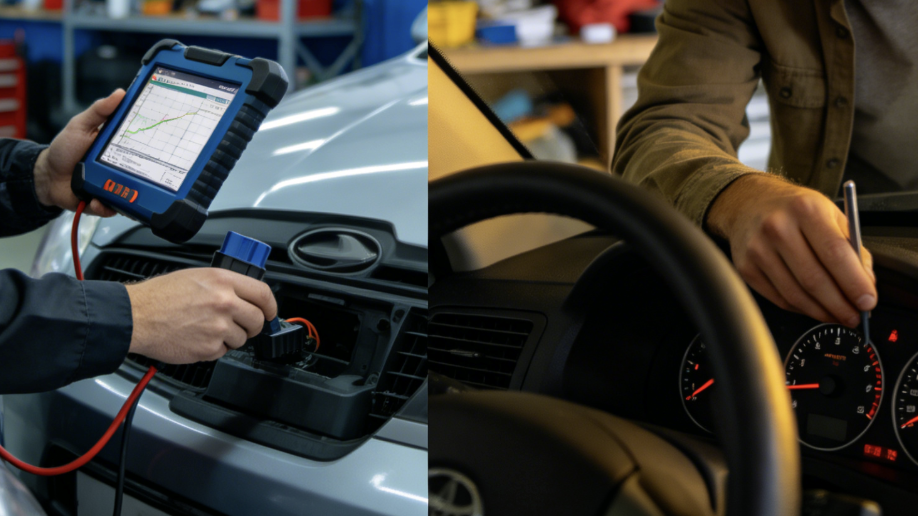
An OBD2 scanner is a small device that communicates directly with your car’s ECU. It’s considered the most reliable way to reset a check engine light without affecting your car’s settings.
Step-by-Step:
Locate the OBD2 port under the driver’s side dashboard or near the center console.
Plug in the scanner and turn the ignition to the “ON” position without starting the engine.
Read the error codes displayed on the screen. Write them down in case the problem comes back.
Select the “Clear Codes” or “Erase” option on the scanner.
Turn off the ignition, unplug the device, then start the engine to confirm the light is off.
Benefits:
Accurate and safe for your vehicle
Keeps presets and ECU memory intact
Some scanners provide live data, repair hints, and definitions for codes
Extra Tip: Stores like AutoZone or O’Reilly often offer free code reading if you don’t own a scanner. This is a convenient option for quick checks.
Turning the ignition on and off multiple times can trick the ECU into resetting. It’s a soft, non-invasive method that works for minor glitches.
Step-by-Step:
Sit in the car, close all doors, and ensure accessories are off.
Turn the key to the “ON” position (do not start the engine) and leave it for about 10 minutes.
Turn it off for 10 seconds.
Repeat this process 2–3 times.
Start the car and check if the light goes off.
When This Works:
Ideal for minor sensor errors or small ECU glitches
Often effective for older or non-complex vehicles
Limitations:
Will not fix major engine or electrical problems
If the underlying issue is unresolved, the light may return quickly
Removing the ECU or ECM fuse essentially cuts the ECU’s power, forcing it to reset. This method works best if your vehicle has a dedicated ECU fuse.
Step-by-Step:
Locate the fuse box under the dashboard or in the engine compartment.
Use the owner’s manual to find the fuse labeled ECU, ECM, or EFI.
Remove the fuse using a fuse puller or pliers.
Wait 5–15 minutes before reinserting it.
Turn the ignition on and check if the check engine light has reset.
Precautions:
May erase radio presets, clock settings, and ECU memory
Removing the wrong fuse can disable other systems temporarily
Make sure to mark presets and avoid accidental fuse removal
Best Use: Vehicles with a dedicated ECU fuse or after minor sensor replacements.
Modern cars often allow minor faults to clear automatically after a few driving cycles. The ECU monitors sensors and resets itself if the problem no longer exists.
How It Works:
Drive normally over a few days, including a mix of idling, city traffic, highway speeds, and stop-and-go situations.
The system checks oxygen sensors, fuel trims, and other components before turning the light off.
Timeframe:
Usually 50–100 miles or a few days of mixed driving
Limitations:
Slow, requires patience
Only works if the initial issue has been fixed
Won’t resolve persistent or serious faults
Some cars require a specific driving pattern to recalibrate the ECU after repairs or minor updates. This is often called a throttle relearn or ECU adaptation procedure.
Step-by-Step:
Start the engine and let it idle for 5 minutes to warm up.
Accelerate smoothly to highway speed (55–65 mph) and maintain it for 10–15 minutes.
Decelerate gradually to a stop and idle for a few minutes.
Repeat if necessary, depending on the vehicle manufacturer instructions.
When to Use:
After replacing sensors, spark plugs, or performing minor engine repairs
When the car shows improved but inconsistent performance
Safety Considerations:
Perform on safe, open roads
Avoid heavy traffic or abrupt maneuvers during acceleration
Resetting the check engine light isn’t something to do randomly. It works best after addressing the problem that triggered it. Here are common scenarios when resetting makes sense.
When you swap out faulty sensors like oxygen (O2) or mass airflow (MAF), the ECU may still hold old error codes. Resetting the light ensures the system recognizes the new sensor. Without it, your car might show the CEL even though the repair is complete.
Small fixes like tightening a gas cap, replacing a spark plug, or fixing a vacuum leak can still leave the light on. Resetting lets the ECU clear old codes and monitor the engine fresh. It’s a quick way to confirm repairs worked.
If you’ve upgraded parts like a performance chip, exhaust, or intake system, the ECU may need to relearn fuel trims and timing. Resetting the light after modifications allows the engine to adapt to changes and run efficiently.
Sometimes the light stays on even after the root problem is fixed. In this case, a reset can clear stale codes and let the ECU reevaluate the system. It’s important, though, to make sure the original issue is fully addressed before clearing the light, or it may return quickly.
Scenario | Why Reset Helps | Notes |
|---|---|---|
Sensor replacement | Clears old codes, recognizes new sensors | O2, MAF, coolant, throttle position |
Minor repairs | Confirms fix worked | Gas cap, spark plugs, vacuum leaks |
Engine mods | Allows ECU to adapt | Chips, exhaust, intake upgrades |
Persistent CEL | Removes stale codes | Ensure problem is fully resolved |
Resetting a check engine light can be tempting to handle at home, but knowing when to go pro saves time and money.
Mechanics have tools and experience we usually don’t. They can spot underlying problems that a simple code reader can’t. They often prevent small issues from becoming expensive repairs. Plus, they can safely reset your ECU without risking lost settings or triggering new errors.
Basic OBD2 scanners show trouble codes and allow simple resets. That’s great for minor issues or DIY repairs. Advanced diagnostic tools can monitor live sensor data, track intermittent problems, and pinpoint complex electrical or engine faults. These tools reduce guesswork and recurring CEL triggers.
Clearing codes without addressing the root cause can cause the light to come back. Professionals help ensure repairs are accurate and lasting. They avoid unnecessary parts replacement, misdiagnosis, or wasted effort that often happens during DIY attempts.
DIY resets work best for minor problems like a loose gas cap, new spark plugs, or recently replaced sensors. They’re quick, cheap, and effective if the issue is clear. A professional is needed if the CEL persists, the engine misfires, you notice smoke or unusual sounds, or codes relate to complex systems like emissions, fuel injection, or advanced electronics.
Quick Comparison Table:
Task | DIY Suitability | Professional Advantage |
|---|---|---|
Gas cap, minor sensor reset | ✅ Easy | ✅ Safe and verified |
Spark plugs, small repairs | ✅ Quick | ✅ Confirm fix and prevent errors |
Complex electrical, emissions, intermittent codes | ❌ Not recommended | ✅ Accurate diagnosis and repair |
Persistent or flashing CEL | ❌ Risky | ✅ Prevent engine damage |
A: Yes, you can reset it using an OBD2 scanner, ignition key cycling, or fuse removal, but only after fixing the underlying issue.
A: Modern ECUs can self-clear minor errors after several drive cycles under normal conditions, usually over 50–100 miles or a few days.
A: It depends on the method and issue. Manual resets are instant, scanner clears are immediate, while drive cycles may take days or 50–100 miles.
A: Use a scanner, cycle the ignition key on/off for 10+ minutes, or remove/reinstall the ECU fuse for a soft reset.
A: You can manually cycle the ignition key, use a fuse reset, or complete multiple driving cycles once the problem is fixed.
Resetting your check engine light doesn’t have to be stressful or complicated. By using scanners, ignition cycles, or fuse resets, you can manage minor issues efficiently, while knowing when to seek professional help ensures long-term engine health.
Guangzhou Yawin Technology Co., LTD. offers innovative automotive diagnostic tools and resources to help drivers tackle CEL issues confidently, keeping your vehicle performing at its best. Take control of your dashboard alerts and drive with peace of mind.