Views: 0 Author: Site Editor Publish Time: 2026-02-09 Origin: Site
Battery Light – Portability and Innovation have completely changed how we illuminate homes, workplaces, and outdoor adventures. From compact LED battery lights to versatile rechargeable lanterns, these devices deliver unmatched portability, energy efficiency, and smart functionality. Whether you need a reliable battery light for emergencies, hands-free work, or eco-friendly outdoor solutions, it adapts to every scenario. In this article, we explore the evolution, advantages, and future trends of battery lights, helping you select the right solution for maximum convenience, sustainability, and innovation.
Battery-powered lights first appeared in the late 1800s. They were bulky and heavy. They used carbon-zinc batteries and incandescent bulbs, which ran out quickly. People relied on them mainly for emergencies or short tasks. Early flashlights often barely produced enough light to see in a dark room. Miners and early campers carried these lamps to navigate tunnels or wooded areas. Despite their limitations, they laid the groundwork for portable lighting we rely on today.
Key Limitations:
Short runtime, often under an hour.
Large, heavy designs.
Dim, uneven light output.
Practical Uses Back Then:
Application | Example |
|---|---|
Mining | Navigating underground tunnels |
Outdoor | Camping or evening chores |
Household | Emergency use during power outages |
Alkaline batteries arrived mid-20th century and changed the game. They lasted longer and were more reliable. Lights became smaller, brighter, and easier to carry. Suddenly, battery-powered lamps weren’t just for emergencies—they could be part of daily life. People started using them for household chores, outdoor adventures, and work tasks. Flashlights became lightweight enough to carry in pockets or backpacks.
Benefits of Alkaline Batteries:
Longer runtime, several hours per battery set.
Improved portability, smaller designs.
Brighter, more consistent light.
Examples of Everyday Use:
Backyard evening activities.
Walking or hiking at night.
Household maintenance in dim spaces.
LEDs completely transformed battery-powered lighting. They use far less energy and shine much brighter. Compared to old incandescent bulbs, they last decades longer and produce almost no heat. LEDs are also tough—they resist drops, vibrations, and rough handling. Modern flashlights and lanterns can reach over 1,000 lumens, lighting up large areas efficiently. Work lights use LEDs to provide strong, steady light for hours without needing new batteries.
LED Advantages:
High efficiency, low energy waste.
Extremely long lifespan, often 50,000+ hours.
Compact design options for portable lights.
Examples:
Device Type | LED Features |
|---|---|
Flashlight | Focused beam, 1000+ lumens |
Lantern | 360-degree light, multiple brightness levels |
Work Light | Durable casing, bright, hands-free options |
Lithium-ion batteries made battery-powered lights smarter and more convenient. They hold more energy than older batteries, charge faster, and last longer. Many lights now include timers, brightness adjustments, and even color temperature control. Some models connect to smartphones through Bluetooth, allowing easy customization. Rechargeable lights reduce waste too, since they cut down on disposable batteries. They are practical for both indoor and outdoor use and make portable lighting sustainable.
Smart Features Today:
Adjustable brightness and light modes.
Timer and automated shut-off functions.
Color temperature control (warm to daylight).
Bluetooth and app control for advanced lights.
Benefits Over Disposable Batteries:
Less environmental impact.
Lower long-term cost.
Extended performance, reliable for hours of use.
Battery-powered lights are easy to carry anywhere. Many models are compact and lightweight. You can use them indoors, outdoors, or on industrial sites. They fit in backpacks, toolboxes, or even pockets.
Hands-free options like headlamps make tasks simpler. Hikers, climbers, and technicians can focus on work while lighting their path. Lanterns and portable floodlights let you illuminate larger spaces without dragging cords around.
Key Benefits:
Easy transport, small and lightweight designs
Hands-free operation for safety and convenience
Quick setup for any environment
Examples of Use:
Type | Typical Use |
|---|---|
Headlamp | Hiking, climbing, night work |
Lantern | Camping, backyard, workshops |
Floodlight | Construction sites, large outdoor areas |
LED technology powers most modern battery lights. They use far less energy than old incandescent bulbs. This means longer battery life and fewer replacements.
Some rechargeable models run for 12–24 hours on a single charge. They also require minimal maintenance. LEDs produce less heat, so lights last longer and stay safer to handle.
Advantages in a Nutshell:
Reduced energy consumption saves money
Longer runtime per battery or charge
Minimal maintenance, durable design
Battery-powered lights fit many scenarios. In industry, they illuminate construction sites, workshops, and even hazardous environments.
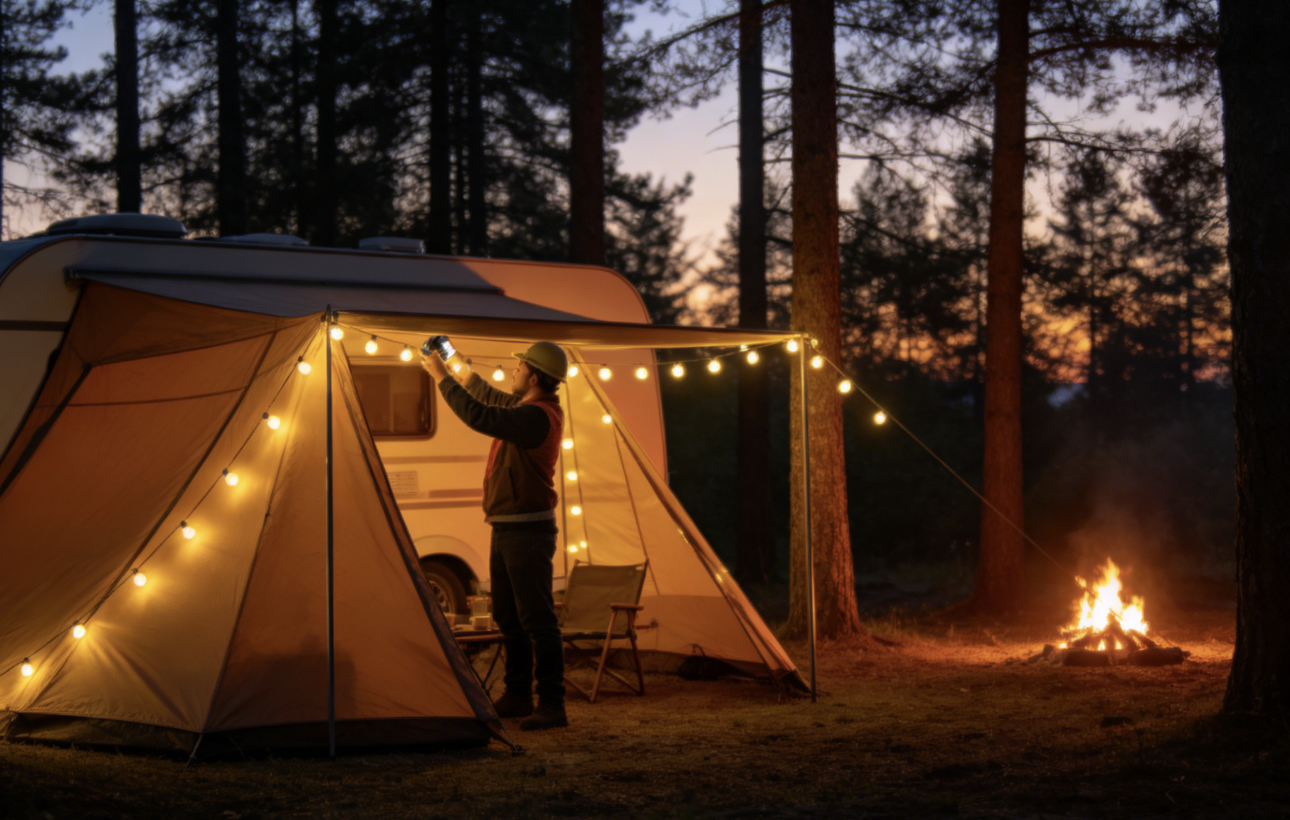
Outdoor enthusiasts use them for camping, hiking, fishing, and garden lighting. They are also key for emergency preparedness—power outages, disaster zones, or roadside safety.
At home, they offer temporary lighting for patios, balconies, or indoor areas without wiring. Their adaptability makes them practical for nearly every situation.
Applications Overview:
Environment | Example |
|---|---|
Industrial | Construction, workshops, petrochemical sites |
Outdoor | Camping, hiking, backyard lighting |
Emergency | Blackouts, disasters, roadside assistance |
Domestic | Patios, balconies, temporary indoor use |
Modern battery lights do more than illuminate. Many include adjustable brightness or multiple lighting modes. You can select dimmed, bright, flashing, or SOS settings.
Battery indicators help you know when to recharge. USB ports let you charge phones or other devices. Some models even include Bluetooth speakers or solar charging options.
Smart Features at a Glance:
Multiple brightness levels, SOS and flashing modes
Battery status indicators for planning usage
Multi-functional: charging ports, Bluetooth, solar panels
Battery technology keeps evolving fast. Solid-state and lithium-sulfur batteries promise higher energy density. This means lights can run longer without adding bulk. Charging times are also dropping. Imagine a lantern fully charged in under an hour, running all night. We can expect lighter, more compact lights that still deliver strong illumination.
Key Innovations:
Higher energy density for longer runtime
Faster charging times, less downtime
Compact, portable designs without sacrificing brightness
Example Comparison:
Battery Type | Typical Runtime | Charge Time | Durability |
|---|---|---|---|
Lithium-ion | 12–24 hours | 2–4 hours | High |
Lithium-sulfur | 20–30 hours | ~1 hour | Very High |
Solid-state | 25–35 hours | <1 hour | Excellent |
Smart technology is making lights smarter than ever. Voice control allows hands-free operation in workshops or homes. Automated brightness adjusts light depending on surroundings. Apps let users customize schedules or modes easily. Sensors detect motion or ambient light to optimize energy usage. They can adapt to workspaces, outdoor areas, or living rooms automatically.
Smart Features Include:
Voice commands and app connectivity
Automatic brightness adjustments based on environment
Motion and ambient light sensors for adaptive lighting
Eco-conscious designs are trending. Recyclable materials are being used for housings and casings. Solar-powered lights are becoming common for gardens, patios, and off-grid areas. Energy-saving LED technology reduces power usage. Rechargeable solutions cut reliance on disposable batteries, lowering environmental impact.
Sustainability Benefits:
Less battery waste, more recycling
Solar or renewable-powered options
Lower energy consumption, longer lifespan
Example Applications:
Use Case | Eco Feature |
|---|---|
Garden lighting | Solar-powered, IP65 rated |
Patio lamps | Recyclable housing, rechargeable battery |
Emergency lanterns | Long-life LED, low power consumption |
Future battery-powered lights combine multiple functions. Some include built-in Bluetooth speakers, power banks, or emergency tools. Compact all-in-one designs are becoming popular for home, outdoors, or industrial tasks. You can charge devices, play music, and light a campsite all from a single unit. It saves space, money, and effort.
Multi-Functional Features:
Integrated speakers, USB charging, or power banks
Emergency tools like SOS signals or alarms
Compact, portable, versatile for any setting
Examples of Hybrid Lights:
Device Type | Functions | Ideal Use |
|---|---|---|
Camping Lantern | Light + USB charger + Bluetooth speaker | Outdoor trips |
Work Light | Light + Magnetic base + SOS alarm | Industrial or emergency |
All-in-One Lamp | Adjustable brightness + Solar + USB | Home, garden, travel |
A: Most battery-powered lights run between 4 to 24 hours per charge, depending on battery capacity, brightness setting, and usage. High-capacity LED lanterns or work lights can sometimes exceed 24 hours.
A: Yes. Modern rechargeable LED lights provide brightness comparable to wired lights. Many models also offer dimming or adjustable modes for different tasks.
A: Use lower brightness levels, avoid extreme temperatures, fully charge before use, and minimize unnecessary on-time. Dimmable functions help conserve energy.
A: Choose lights with IP44 or higher ratings. Models labeled IP65 or IP66 are ideal for heavy rain, outdoor activities, or damp environments.
Battery-powered lights have come a long way, blending portability, efficiency, and smart innovation. Today’s options—from ultra-bright LED flashlights to multi-functional lanterns—make lighting convenient for every scenario, whether at home, outdoors, or in professional settings.
Explore the possibilities with Guangzhou Yawin Technology Co., LTD., where cutting-edge battery-powered lighting solutions meet durability and versatility. Discover how our products can enhance safety, comfort, and productivity, giving you reliable illumination anytime, anywhere. Step into the future of portable lighting and see how convenience and innovation shine together.